
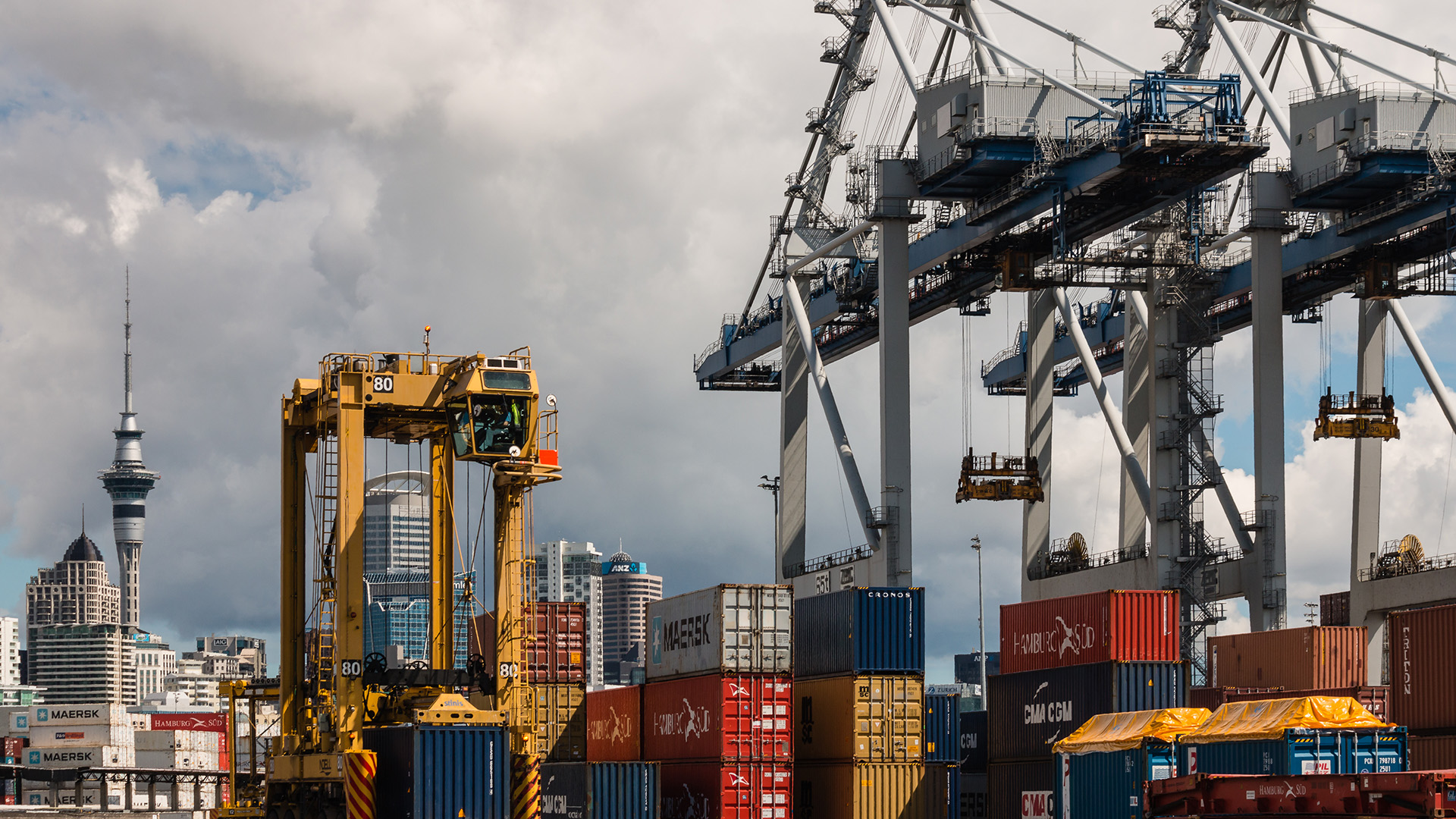
The former chief executive of Port of Auckland Ltd (POAL), Tony Gibson, lost his appeal against his conviction under the Health and Safety at Work Act 2015 (HSWA) following the night shift death of a port worker, Pala’amo Kalati. Mr Kalati was crushed by a container while helping to unload a container ship. The High Court confirmed the District Court’s decision on the duties of an officer of a large organisation under the HSWA.
Failure to take steps to minimise risk
The High Court7 confirmed that Mr Gibson had failed to take the steps that a reasonable officer in his position would have taken to minimise the risk of an accident occurring. The court agreed with the District Court that Mr Gibson was personally aware of the risks associated with loading and unloading containers, that the company’s documentation containing its rules for handling containers was unclear, and that the company had inadequate systems in place to determine whether its workers were complying with its rules.
The court also agreed that Mr Gibson should have been aware of the serious risks associated with handling containers following the 2018 death of one of the port’s workers.
The High Court also upheld the District Court’s decision to impose a fine of $130,000 on Mr Gibson and to order him to pay a further $60,000 in court costs.
The court’s decision confirms several principles relating to the duties of company officers under the HSWA, which were set down in the District Court’s decision. These are:
- It is not enough for a company officer to ensure that systems are in place to protect workers’ safety. They must also ensure that work practices are monitored for compliance. They must ensure that they are aware of how their staff actually carry out their work as opposed to how they are supposed to do so, and
- A company officer cannot simply delegate their health and safety responsibilities to someone else in their company and rely on that person to ensure compliance with health and safety rules, without proper enquiry that the organisation’s systems are adequately addressing health and safety risks. They must critically examine information provided to them by their staff relating to health and safety. They must also create mechanisms to verify the information they are receiving.
Maritime New Zealand, the government body with responsibility for health and safety prosecutions relating to ports, only charged POAL’s chief executive officer. The High Court observed that there were a number of different people at the port company, including directors and managers, who had obligations under the HSWA who could also have been charged.
This decision emphasises that both those involved in governance and operational matters in a large organisation may have personal health and safety obligations.
If you have any concerns about your health and safety obligations as a company director or senior employee, please don’t hesitate to contact us.
DISCLAIMER: All the information published in Fineprint is true and accurate to the best of the authors’ knowledge. It should not be a substitute for legal advice. No liability is assumed by the authors or publisher for losses suffered by any person or organisation relying directly or indirectly on this newsletter. Views expressed are the views of the authors individually and do not necessarily reflect the view of this firm. Articles appearing in Fineprint may be reproduced with prior approval from the editor and credit being given to the source. Copyright © NZ LAW Limited, 2026. Editor: Adrienne Olsen. E: adrienne@adroite.co.nz. M: 029 286 3650.